One of the more curious patterns that shows up in long-term health challenges is this: people can have normal oxygen levels on paper and still behave as if their tissues are starving. They breathe fine. Their labs look acceptable. Their blood oxygen saturation reads “normal.” And yet fatigue persists. Healing stalls. Inflammation lingers. Energy feels shallow. Recovery is slow. This contradiction points to something that is rarely discussed outside of physiology textbooks: oxygen distribution matters more than oxygen availability.

In a healthy body, oxygen does not spread evenly. It forms gradients — subtle differences in concentration that guide cellular behavior. Some tissues require higher oxygen tension to regenerate. Others rely on lower levels to trigger repair cycles. Immune cells use oxygen differently depending on whether they are attacking, resolving, or standing down. Even mitochondria alter their behavior based on micro-changes in local oxygen pressure.
When these gradients are intact, tissues behave intelligently.
When they collapse, cells lose context.
What collapses oxygen gradients is not usually a breathing problem. It’s an environmental one.
Chronic inflammation thickens extracellular spaces. Biofilms alter diffusion. Oxidative debris changes redox balance. Microbial byproducts consume oxygen locally. Congested lymph restricts flow. Damaged microcirculation creates pockets of hypoxia beside areas of excess oxygen.
The result is not global oxygen deficiency — it’s oxygen confusion.
Cells that should be repairing behave as if under threat. Cells that should be resting stay active. Immune responses fail to resolve because the oxygen cues that signal “stand down” never arrive.
This is one reason healing can feel stalled even when nutrition, rest, and supplementation are optimized.
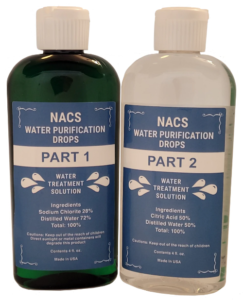
In alternative health research, chlorine dioxide has been explored not as an oxygen source, but as a condition-altering agent — something that may influence how oxygen is used, not how much is inhaled.
Its proposed relevance here has less to do with adding oxygen and more to do with reducing the factors that distort oxygen gradients in the first place.
When microbial burden decreases, oxygen demand normalizes. When biofilms weaken, diffusion improves. When oxidative waste is reduced, redox signaling stabilizes. When inflammation subsides, microcirculation opens. When lymphatic congestion eases, interstitial spaces clear.
None of this forces oxygen anywhere.
It simply allows oxygen to return to doing what it already knows how to do.
One of the more telling signs that oxygen gradients are restoring isn’t dramatic energy. It’s subtle coherence.
People notice that wounds heal more predictably. Muscles recover faster. Skin tone evens out. Sleep deepens without sedation. Inflammation resolves more completely after stress. Brain fog lifts without stimulation. Temperature regulation improves. Exercise feels “cleaner,” not exhausting.
These changes tend to appear together, quietly, often without fanfare.
That’s because oxygen gradients don’t announce themselves. They organize.
This perspective also explains why aggressive oxygen therapies, hyperventilation techniques, or forced circulation strategies can backfire in sensitive systems. Pushing oxygen into tissues that cannot distribute it properly can worsen oxidative stress, not relieve it.
Gradients must be restored before delivery is increased.
From this angle, healing isn’t about flooding the system — it’s about re-establishing spatial intelligence at the tissue level.
A more useful way to think about oxygen, then, is not as fuel, but as information.
Where oxygen goes tells cells what to do.
Where it lingers tells them how long.
Where it withdraws tells them when to stop.
When that information flow is disrupted, the body loses coordination.
When it’s restored, repair resumes almost automatically.
A quiet reframe:
Rather than chasing oxygen with force, many people explore sequences that prioritize:
- reducing internal oxygen consumers (microbial load, inflammation)
- clearing diffusion barriers (biofilms, congestion)
- stabilizing redox balance
- restoring microcirculation
- allowing gradients to reform naturally
When this happens, oxygen doesn’t need encouragement. It finds its way.

The body rarely fails because it lacks resources. It fails because resources can’t reach the right places at the right time.
Healing often begins not when more is added — but when the pathways that guide distribution become clear again.
Disclaimer
This article is for informational and research purposes only. It does not diagnose, treat, cure, or prevent disease. Chlorine dioxide is not approved for internal therapeutic use by regulatory agencies. Oxygen physiology is complex; consult qualified professionals before making health-related decisions.
