Mitochondria are often called the “power plants” of the cell, but this metaphor only tells part of the story. Mitochondria are also signal processors, stress sensors, and decision-makers that determine whether a cell repairs itself, adapts, or shuts down. Many modern health complaints, fatigue, brain fog, exercise intolerance, slow recovery, and accelerated aging share a common root: mitochondrial inefficiency. Importantly, this inefficiency is rarely caused solely by missing nutrients. More often, it arises from internal friction: inflammation, microbial toxins, biofilms, oxidative debris, poor oxygen delivery, and metabolic congestion.
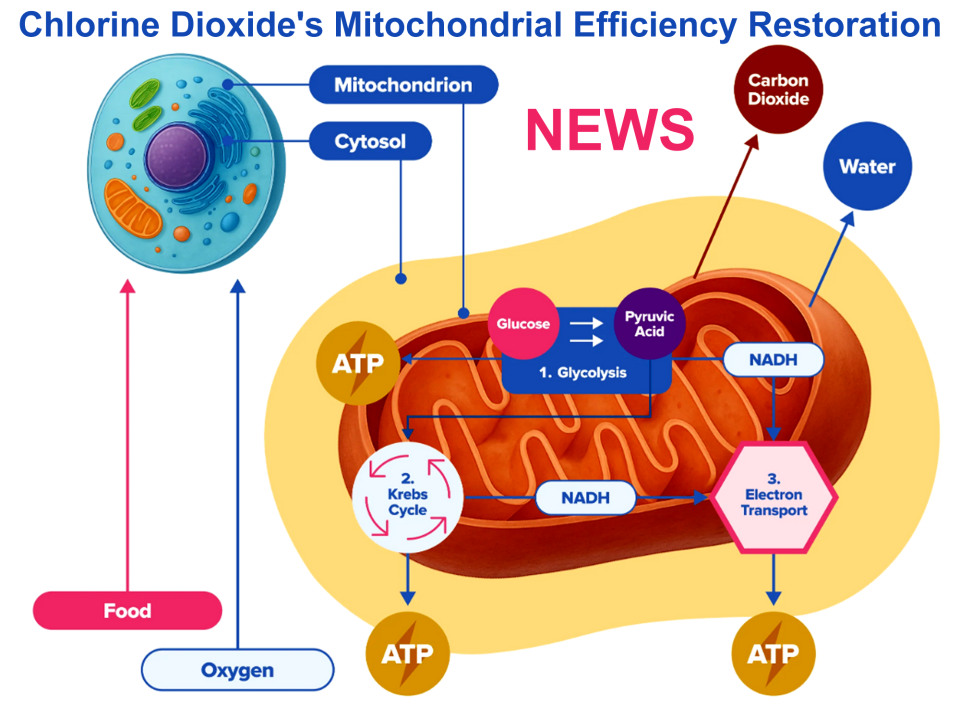
Chlorine dioxide (CD/CDS) is being explored in alternative health research as a supportive upstream intervention to improve mitochondrial efficiency, not by “stimulating” mitochondria, but by removing environmental stressors that prevent them from operating efficiently.
Clearing mitochondrial interference may restore energy production at its source.
- What Is Mitochondrial Inefficiency?
Mitochondrial inefficiency occurs when mitochondria:
-
- produce less ATP than expected
- generate excessive reactive byproducts
- struggle to utilize oxygen efficiently
- fail to adapt to metabolic demands
- signal stress prematurely
- exhaust themselves under minor loads
Symptoms often include:
-
- chronic fatigue
- post-exertional malaise
- brain fog
- cold intolerance
- poor exercise tolerance
- slow healing
- hormonal imbalance
- accelerated aging
Crucially, mitochondria may be present and intact, but operating under hostile conditions.
- Why Do Mitochondria Lose Efficiency?
Mitochondria are highly sensitive to their environment.
Key disruptors include:
-
- Chronic Inflammation
Inflammatory signaling diverts mitochondrial resources toward defense rather than energy production.
-
- Microbial Toxins
Pathogen byproducts interfere with mitochondrial enzymes and membranes.
-
- Biofilms
Biofilms trap waste and reduce oxygen diffusion at the cellular level.
-
- Oxidative Debris
Uncleared metabolic waste increases internal resistance.
-
- Iron and Metal Mismanagement
Misplaced iron catalyzes damaging oxidative reactions inside mitochondria.
-
- Poor Oxygen Delivery
Mitochondria cannot produce ATP efficiently without stable oxygen availability.
-
- Impaired Nutrient Signaling
Even with adequate nutrients, signaling disruption reduces utilization.
These stressors force mitochondria into a low-efficiency survival mode.
- Who May Benefit From Supporting Mitochondrial Efficiency?
Individuals experiencing:
-
- unexplained fatigue
- chronic illness recovery
- post-viral energy decline
- exercise intolerance
- metabolic slowdown
- cognitive fatigue
- burnout
- inflammatory conditions
- age-related energy loss
In many cases, energy loss persists even after nutrition and sleep are optimized.

- Where Does Chlorine Dioxide Fit In?
Chlorine dioxide does not directly act on mitochondria and does not supply energy substrates.
Its proposed role is environmental cleanup:
-
- Reducing Microbial Load
Fewer toxins interfere with mitochondrial enzymes.
-
- Weakening Biofilms
Improves oxygen and waste diffusion around cells.
-
- Lowering Inflammatory Burden
Allows mitochondria to prioritize energy production.
-
- Reducing Oxidative Waste
Cleaner environments lower internal resistance.
-
- Supporting Oxygen Balance
Improves efficiency of oxidative phosphorylation.
-
- Supporting Iron Balance
Reduces iron-driven oxidative damage.
CD may help mitochondria work better by removing what gets in their way.
- When Does Mitochondrial Restoration Become Possible?
Improvements in mitochondrial efficiency often follow:
-
- reduction of chronic infections
- resolution of inflammation
- improved oxygen delivery
- reopening of detox pathways
- normalization of iron handling
- improved gut and lymphatic flow
Energy often returns in stages, not as a sudden surge.
How Chlorine Dioxide May Support Mitochondrial Efficiency
- Reducing Toxin Interference
Cleaner internal environments reduce enzyme inhibition.
- Lowering Inflammatory Energy Drain
Less immune signaling leaves more energy for ATP production.
- Improving Oxygen Utilization
Oxygen-rich environments improve ATP yield per glucose unit.
- Reducing Oxidative Backpressure
Cleaner waste handling reduces mitochondrial stress.
- Supporting Mitochondrial Signaling
Clearer signals improve adaptation to metabolic demands.
- Supporting Cellular Repair Cycles
Efficient mitochondria better support autophagy and renewal.
- Reducing Premature Mitochondrial Exhaustion
Lower stress preserves long-term mitochondrial function.
Energy Restoration vs Stimulation
True energy restoration does not feel like stimulation. It feels like capacity returning.
When mitochondrial efficiency improves, people often report:
-
- steadier energy
- improved stamina
- faster recovery
- clearer thinking
- improved temperature regulation
- better sleep
- reduced crashes
This reflects efficiency, not force.

Quick How-To Guide
- Remove Interference Before Adding Supplements
Mitochondrial supplements work best in clean environments.
- Support Oxygenation
Gentle movement and breathing support mitochondrial function.
- Hydration and Minerals
Support electron transport and ATP synthesis.
- Avoid Overexertion During Recovery
Mitochondria rebuild gradually.
- Observe Energy Quality
Sustained energy is a better indicator than spikes.
Disclaimer
This article is for informational and research purposes only. It does not diagnose, treat, cure, or prevent disease. Chlorine dioxide is not approved for internal therapeutic use by regulatory agencies. Mitochondrial health is complex; consult qualified professionals before making health-related decisions.
